Glass vs Metal vs Plastic: The Complete Guide to Cannabis Storage Materials
Choosing the Right Material for Cannabis Storage
The material of your storage container affects everything from preservation quality to branding potential to environmental impact. While all containers hold cannabis, not all containers protect it equally.
In this comprehensive comparison, we'll examine glass, metal, plastic, silicone, and wood containers to help you choose the best material for your specific needs.
Glass: The Gold Standard
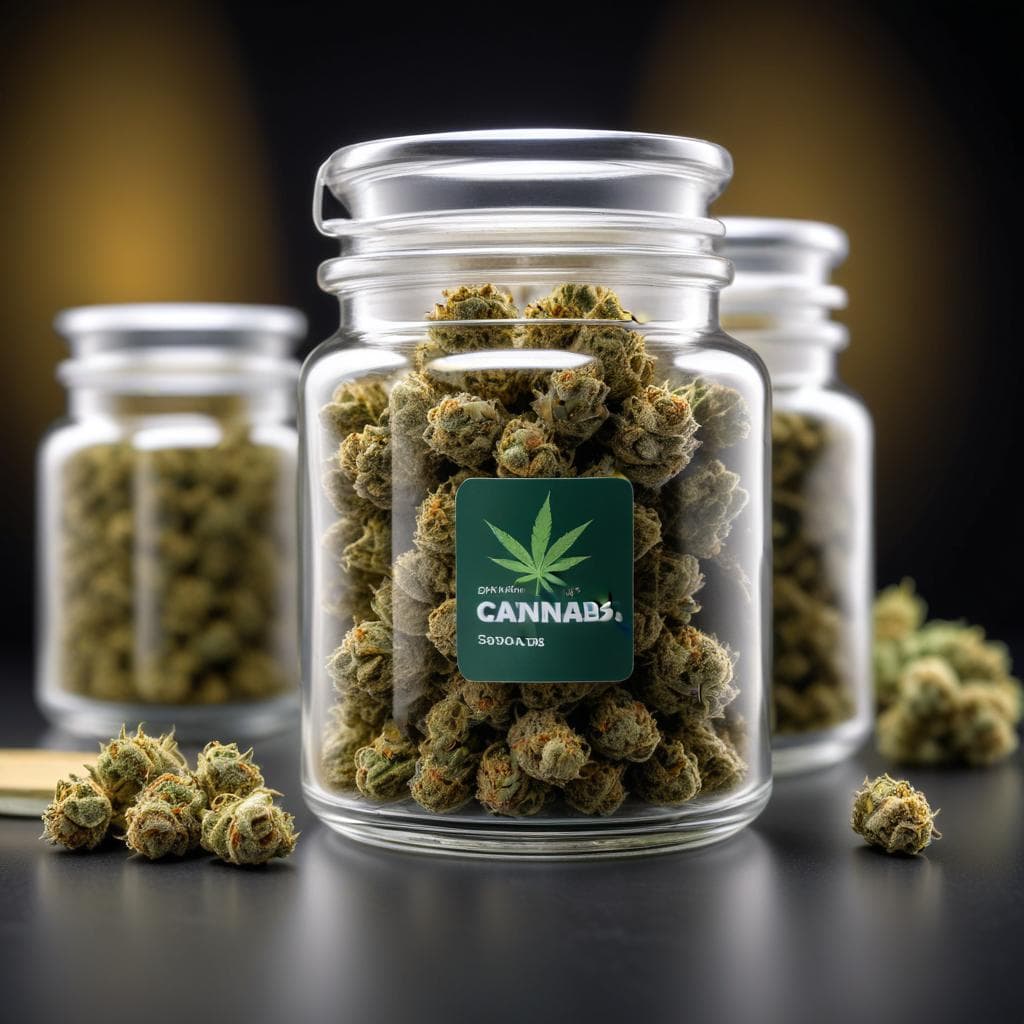
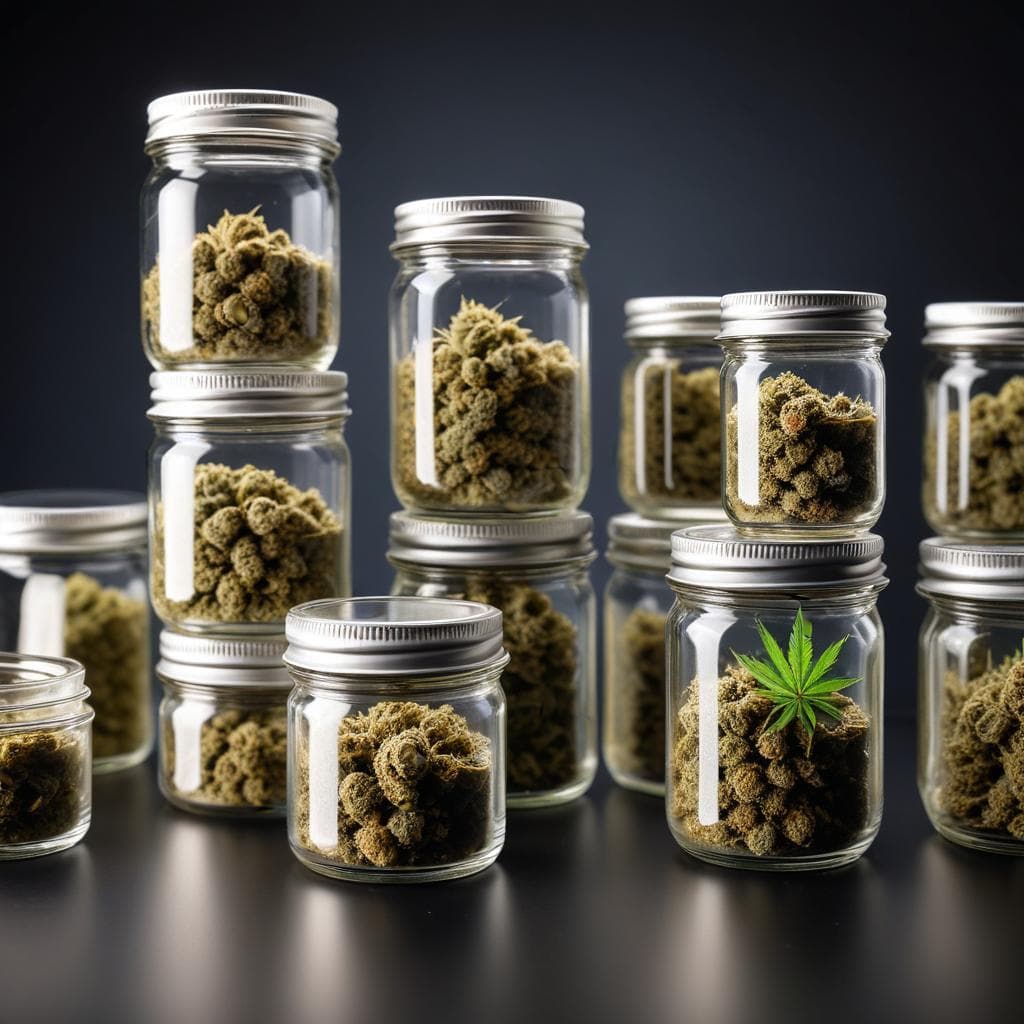
Glass stash jars have been the preferred cannabis storage material for decades, and for good reason.
Advantages of Glass
Chemical Inertness: Glass doesn't react with cannabis or release any chemicals. Your flower tastes exactly as it should, with no contamination from the container.
Impermeable: Glass is completely impermeable to air and moisture when properly sealed. Nothing gets in or out through the material itself.
Visibility: Clear or tinted glass lets you see contents without opening the container, preserving freshness while monitoring quantity.
Cleanability: Glass cleans easily with alcohol or soap and water, leaving no residue or odors. It can be sanitized for reuse indefinitely.
Premium Feel: Glass containers feel substantial and quality. They elevate the perception of the product inside.
Recyclable: Glass is infinitely recyclable without quality degradation.
Disadvantages of Glass
Fragility: Glass breaks if dropped. This limits portability and requires careful handling.
Weight: Glass is heavier than plastic or metal alternatives, which matters for shipping and travel.
Cost: Quality glass containers cost more than basic plastic options.
Light Transmission: Clear glass offers no light protection. UV glass jars solve this but cost more.
Best Glass Options
Clear glass: Best when stored in darkness, offers visibility Amber glass: Some UV protection, traditional pharmaceutical look UV glass jars: Maximum light protection, premium storage Frosted glass: Aesthetic appeal, partial light blocking
Ideal Use Cases for Glass
- Home storage (primary choice)
- Dispensary packaging
- Display jars
- Long-term preservation
- Premium products
- Humidity-controlled storage
Metal: Durability Champion
Metal containers offer unique advantages, particularly for portability and durability.
Advantages of Metal
Durability: Metal doesn't break when dropped. This makes it ideal for travel and outdoor use.
Light Blocking: Opaque metal completely blocks light without any special treatment.
Lightweight: Aluminum containers are lighter than glass of similar size.
Heat Resistance: Metal handles temperature extremes better than plastic.
Cool Factor: Metal containers have a modern, industrial aesthetic that appeals to many consumers.
Disadvantages of Metal
Potential Reactivity: Some metals can react with cannabis over time, affecting flavor. Quality containers use food-safe coatings.
No Visibility: You can't see contents without opening.
Denting: Metal can dent, affecting seal integrity.
Thermal Conductivity: Metal transfers temperature quickly - gets hot in sun, cold in winter.
Seal Quality: Metal-to-metal seals are typically less airtight than glass with silicone gaskets.
Best Metal Options
Aluminum: Lightweight, affordable, requires coating Stainless steel: Premium, non-reactive, heavier Tin: Traditional look, typically lined Coated metal: Food-safe interior coating recommended
Ideal Use Cases for Metal
- Travel containers
- Outdoor activities
- Pocket carry
- Situations where breakage is a concern
- Modern aesthetic preference
Plastic: The Budget Option
Plastic containers are affordable and lightweight but come with significant trade-offs.
Advantages of Plastic
Cost: Plastic is the most affordable container material.
Lightweight: Plastic weighs less than glass or metal.
Shatter-Resistant: Plastic won't break like glass (though it can crack).
Variety: Available in countless shapes, sizes, and colors.
Disadvantages of Plastic
Permeability: Many plastics are actually permeable to air and terpenes over time. This affects freshness.
Off-Gassing: Some plastics release chemicals, especially when new or warm. This can affect flavor and potentially introduce unwanted compounds.
Static Charge: Plastic builds static electricity, which attracts trichomes to container walls.
Durability: Plastic degrades over time, especially with UV exposure. It becomes brittle and can crack.
Environmental Impact: Most plastic isn't effectively recycled and persists in environment.
Perceived Quality: Plastic containers feel cheap and diminish product perception.
If You Must Use Plastic
Best plastic types:
- HDPE (High-Density Polyethylene) - more resistant to permeation
- PP (Polypropylene) - generally food-safe
- Medical-grade plastics - tested for safety
Avoid:
- Thin, flimsy plastics
- Unmarked or unknown plastics
- Containers not designed for cannabis/food
Ideal Use Cases for Plastic
- Very short-term storage only
- Budget-constrained situations
- Single-use packaging
- Where breakage is unacceptable and metal isn't available
Recommendation: Upgrade from plastic to glass or metal when possible. The quality difference is worth the small additional cost.
Silicone: The Concentrate Specialist
Silicone containers have carved a niche for concentrate storage.
Advantages of Silicone
Non-Stick Surface: Concentrates don't adhere to silicone, making extraction easy.
Unbreakable: Silicone is virtually indestructible.
Flexible: Bends without damage, great for pockets and bags.
Heat Resistant: Withstands temperature extremes better than plastic.
Disadvantages of Silicone
Slight Permeability: Silicone is not perfectly airtight - terpenes can slowly migrate through.
Terpene Absorption: Silicone can absorb terpenes over time, affecting flavor of future contents.
Not Ideal for Flower: Trichomes stick to silicone, making it poor for flower storage.
Quality Variance: Low-quality silicone can off-gas. Look for food-grade certification.
Ideal Use Cases for Silicone
- Concentrate storage (excellent)
- Concentrate transport
- Temporary flower holding (not storage)
- Portable dab containers
Wood: The Luxury Choice
Wood stash boxes offer aesthetic and functional benefits unique to natural materials.
Advantages of Wood
Aesthetic Appeal: Nothing matches the natural beauty and warmth of wood.
Customization: Laser engraving creates permanent, elegant branding.
Humidity Regulation: Wood naturally absorbs and releases moisture, helping stabilize humidity.
Durability: Quality wood boxes last generations.
Multi-Compartment: Wooden boxes typically include organized storage sections.
Disadvantages of Wood
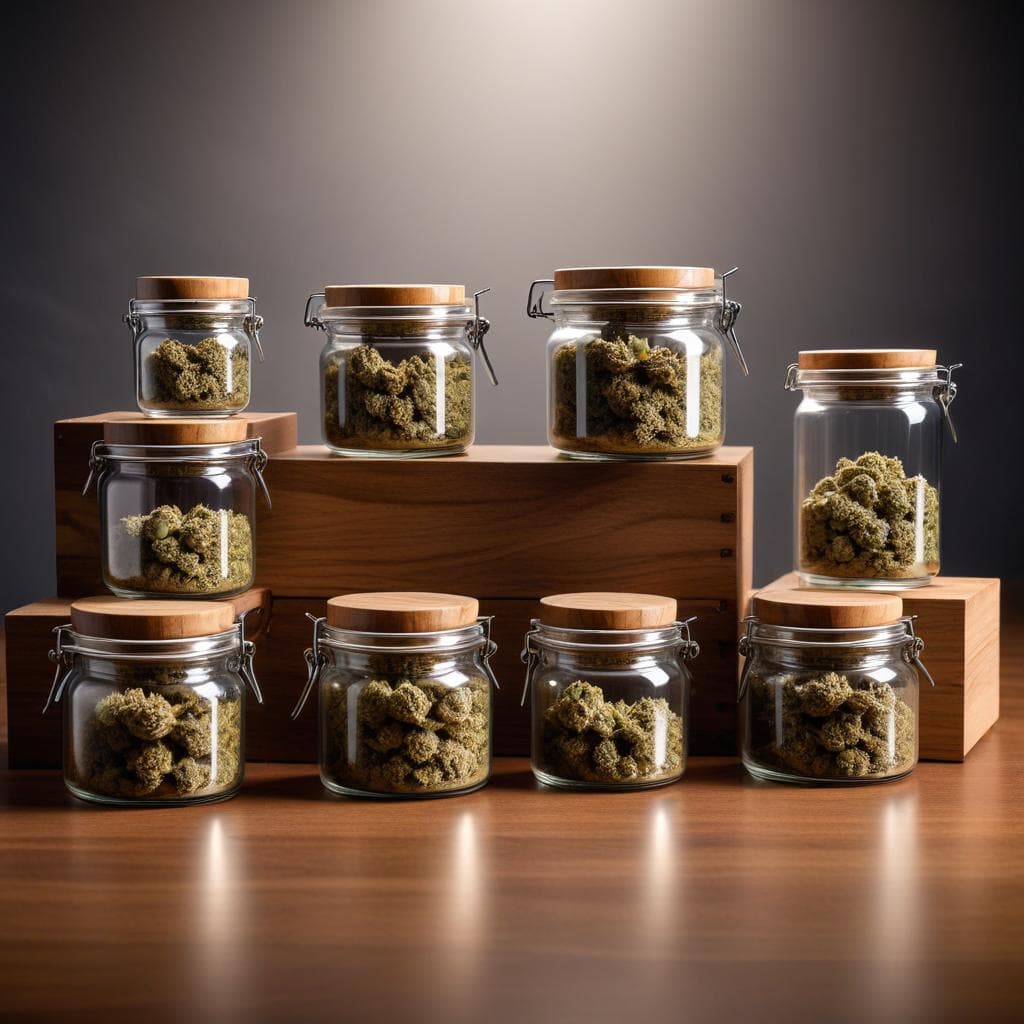
Not Airtight: Wood alone doesn't create an airtight seal. Use glass jars inside wooden boxes.
Not Smell-Proof: Wood is porous and won't contain odors.
Cost: Quality wooden boxes are premium-priced.
Size: Typically larger than single-jar solutions.
Best Wood Applications
- Outer storage container for jars
- Gift packaging
- Complete kit storage
- Display and organization
- Premium branding
Pro tip: Use glass stash jars inside wood stash boxes for optimal function and aesthetics.
Material Comparison Chart
| Factor | Glass | Metal | Plastic | Silicone | Wood | |--------|-------|-------|---------|----------|------| | Preservation | Excellent | Good | Fair | Fair | N/A (use with jars) | | Airtight | Excellent | Good | Fair | Fair | Poor | | Durability | Poor | Excellent | Good | Excellent | Good | | Weight | Heavy | Light-Medium | Light | Light | Medium | | Visibility | Yes | No | Sometimes | No | No | | Cost | Medium | Medium | Low | Low | High | | Branding | Excellent | Good | Good | Poor | Excellent | | Feel | Premium | Modern | Cheap | Casual | Luxurious | | Eco-Friendly | Excellent | Good | Poor | Fair | Excellent |
Recommendations by Use Case
Primary Home Storage
Best: Glass stash jars or UV glass jars Why: Maximum preservation, visibility, premium feel
Travel and Portability
Best: Metal containers or smell proof containers Why: Durability, discretion, compact
Dispensary Display
Best: Glass stash jars with custom branding Why: Product visibility, professional appearance, branding opportunity
Gift Sets and VIP Packaging
Best: Wood stash boxes containing glass jars Why: Unmatched presentation, memorable experience, lasting keepsake
Concentrate Storage
Best: Silicone containers for short-term, glass for long-term Why: Easy extraction (silicone), preservation (glass)
Budget Storage
Best: Mason jars (glass) over plastic Why: Even cheap glass outperforms plastic for preservation
Building a Material-Optimized Collection
The Ideal Setup
- UV glass jars - Primary storage for favorite strains
- Glass stash jars - Secondary storage and organization
- Metal container - Daily carry and travel
- Wood stash box - Complete kit organization
- Silicone containers - Concentrate specific needs
For Dispensaries
- Glass stash jars - Display and retail packaging
- UV glass jars - Inventory storage
- Wood stash boxes - VIP and gift packaging
- Metal containers - Travel-friendly retail option
Request a mockup from MunchMakers to see your branding on various container materials.
Conclusion
Material choice significantly impacts cannabis storage quality, durability, and presentation. Glass remains the gold standard for preservation, metal excels at portability, wood provides luxury appeal, and plastic should be avoided when possible.
Match your material to your needs, and don't hesitate to use multiple materials in your storage system. The best approach combines the strengths of different materials for different purposes.
Explore our complete storage collection featuring premium glass stash jars, UV glass jars, and wood stash boxes.
Ready to Create Your Custom Storage?
Put your brand in your customers' hands. Get a free mockup in 24 hours.