Long-Term Cannabis Storage: How to Keep Flower Fresh for Months (or Years)
The Art of Long-Term Cannabis Preservation
Whether you're storing a large harvest, aging special strains, or simply bought more than you can consume quickly, long-term storage requires careful attention to preservation factors.
With proper techniques, cannabis can maintain its quality for a year or more. In this guide, we'll explore the science of degradation, the factors you must control, and the best practices for storing cannabis for extended periods.
Understanding Cannabis Degradation
What Happens Over Time
Without proper storage, cannabis degrades through several processes:
Cannabinoid Conversion: THC slowly converts to CBN through oxidation and UV exposure. While CBN has its own properties, most consumers want to preserve original cannabinoid profiles.
- Well-stored cannabis: ~5% THC loss per year
- Poorly stored cannabis: 15-20%+ THC loss per year
Terpene Evaporation: Terpenes are volatile compounds that evaporate at room temperature, especially in poor storage conditions:
- First to go: Lighter terpenes (limonene, pinene)
- More stable: Heavier terpenes (myrcene, caryophyllene)
- Result: Flattened aroma and flavor profile
Physical Degradation:
- Trichomes become brittle and break off
- Chlorophyll breaks down (browning)
- Texture changes (becomes dry and crumbly)
The Four Enemies of Freshness
1. Oxygen: Triggers oxidation that converts cannabinoids and degrades terpenes. Airtight storage is essential.
2. Light: UV rays accelerate degradation dramatically. Light exposure is the single fastest way to destroy cannabis quality.
3. Temperature: Heat accelerates all chemical reactions. Cooler (not cold) storage extends quality significantly.
4. Humidity: Too dry: Trichomes become brittle, terpenes evaporate faster Too humid: Mold and mildew risk increases
The Long-Term Storage System
Layer 1: The Container
Your first line of defense is an airtight, light-blocking container.
Best options:
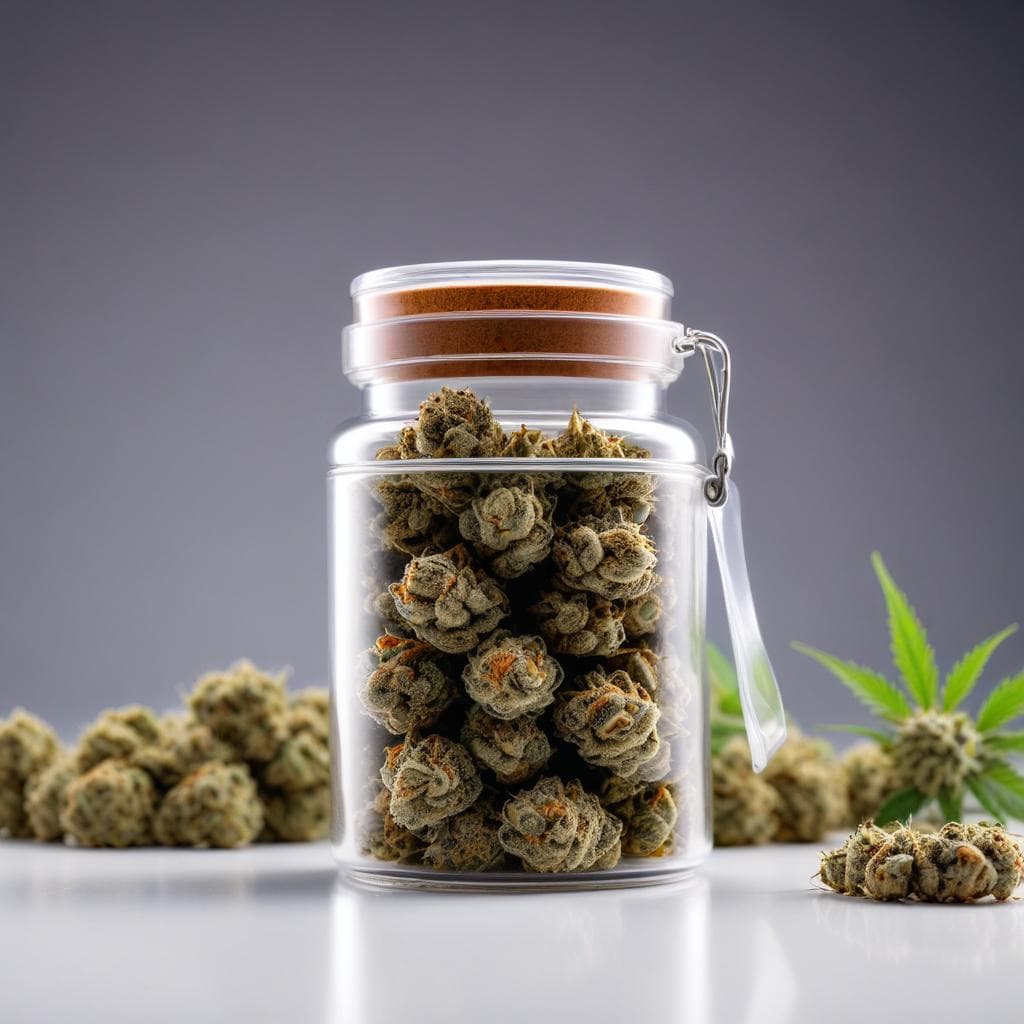
UV glass jars - The gold standard for long-term storage:
- Complete UV protection
- Airtight seal
- Non-reactive material
- Visible contents
Glass stash jars with quality seals - Excellent when stored in darkness:
- Perfect seal
- Non-reactive
- Affordable
- Widely available
Vacuum-sealed containers - For maximum air removal:
- Eliminates oxygen
- Maintains freshness longer
- Requires quality container
Avoid:
- Plastic (can off-gas and isn't airtight long-term)
- Bags (permeable to air over time)
- Metal without coating (can affect flavor)
- Clear containers in light
Layer 2: Humidity Control
Maintaining 58-62% relative humidity is crucial for long-term storage.
Two-way humidity packs:
- 62% RH for maximum preservation
- Replace every 2-4 months
- Size appropriately to container
- Never let packs deplete completely
Pro tip: Stock up on humidity packs. Running out leads to quality loss you can't recover.
Layer 3: Temperature Control
Ideal long-term storage temperature: 60-68°F (15-20°C)
Why this range?
- Cool enough to slow degradation
- Warm enough to avoid trichome brittleness
- Prevents humidity condensation issues
- Sustainable without refrigeration
Storage locations:
- Cool closet (best for most people)
- Basement (if humidity controlled)
- Wine cooler (ideal but not necessary)
- Climate-controlled cabinet
Avoid:
- Refrigerators (humidity and odor issues)
- Freezers (makes trichomes brittle)
- Warm rooms (accelerates degradation)
- Temperature fluctuations
Layer 4: Light Protection
Even in containers, additional light protection helps:
If using clear jars:
- Store in closet or drawer
- Use opaque outer container
- Never place near windows
UV glass jars advantage:
- Can store in ambient light safely
- Still best kept dark for maximum preservation
- Protects during handling and access
Long-Term Storage Timeline
1-3 Months: Standard Storage
Requirements:
- Quality airtight container
- Humidity pack
- Dark location
- Room temperature
Expected quality: 95%+ preserved
3-6 Months: Extended Storage
Requirements:
- UV glass jars or quality sealed jars
- Humidity pack (replace at 3 months)
- Cool, dark location
- Limited opening
Expected quality: 90%+ preserved
6-12 Months: Long-Term Storage
Requirements:
- Premium containers with perfect seals
- Fresh humidity packs
- Consistent cool temperature
- Dark storage
- Minimal access
Expected quality: 85%+ preserved
12-24 Months: Archive Storage
Requirements:
- Vacuum-sealed containers
- UV protection
- Temperature-controlled environment
- Humidity monitoring
- Zero access until needed
Expected quality: 75-85% preserved (varies by strain and conditions)
Beyond 24 Months
Extended storage is possible but quality loss becomes more significant:
- Terpene profile changes notably
- Some cannabinoid conversion expected
- Texture changes likely
- Still usable, but different from fresh
Advanced Preservation Techniques
Vacuum Sealing
Removing air from storage dramatically extends quality:
Benefits:
- Eliminates oxidation
- Stops terpene dispersal
- Maximum preservation
Considerations:
- Can crush delicate flower
- Use rigid containers or partial vacuum
- Re-seal if pack is opened
Nitrogen Flushing
Professional operations use nitrogen to displace oxygen:
How it works:
- Nitrogen replaces oxygen in container
- Inert gas doesn't react with cannabis
- Extended freshness possible
Practicality: Mostly for commercial operations; vacuum sealing achieves similar results for consumers.
Cool Storage Options
Wine cooler storage:
- Consistent 55-65°F temperature
- Dark interior
- Stable environment
- Not as cold as refrigerator
Dedicated cannabis humidor:
- Temperature control
- Humidity management
- Light blocking
- Purpose-built solution
Monitoring Your Stored Cannabis
Regular Checks
For long-term storage, periodic monitoring prevents surprises:
Monthly:
- Visual inspection for mold
- Humidity pack condition check
- Note any visible changes
Quarterly:
- Open and inspect more thoroughly
- Replace humidity packs
- Assess aroma (noting changes)
- Consider quality timeline
Tools for Monitoring
Digital hygrometer:
- Monitors humidity level
- Some include temperature
- Peace of mind
Small ones fit inside jars for continuous monitoring
Signs of Problems
Mold indicators:
- White, fuzzy patches
- Musty smell
- Visible spores
- Discard affected product immediately
Over-drying indicators:
- Crumbles to powder easily
- Harsh smell
- No stickiness whatsoever
- May be recoverable with humidity packs
For Home Growers: Harvest Storage
Large harvests require systematic long-term storage:
Post-Cure Storage Strategy
- Complete cure before long-term storage (minimum 2 weeks)
- Portion into optimal amounts - don't store everything in one container
- Separate by strain - different profiles, different storage needs
- Label everything - strain, harvest date, cure notes
- Rotate consumption - first in, first out
Suggested Portioning
- Personal monthly supply in accessible jar
- 3-month supplies in medium-term storage
- Remainder in vacuum-sealed long-term storage
This system means only some containers get opened regularly, preserving the majority.
For Dispensaries: Inventory Management
Long-term storage helps manage inventory and reduce waste:
Back-Stock Preservation
- Premium UV glass jars for inventory
- Humidity-controlled storage room
- FIFO (first in, first out) rotation
- Regular quality checks
Display vs. Storage
Display jars face different conditions than storage:
- More frequent opening
- Temperature fluctuations
- Light exposure
Solution: Keep display quantities small, refill from properly stored back-stock.
Request a mockup from MunchMakers for branded storage jars for both display and inventory.
Common Long-Term Storage Mistakes
Mistake 1: "Set and Forget"
Even good storage needs occasional monitoring. Humidity packs deplete, conditions change.
Mistake 2: Refrigerator Storage
Refrigerators have humidity fluctuations, strong odors, and frequent temperature changes from door opening. Not ideal.
Mistake 3: Freezer Storage (Without Caution)
Freezing makes trichomes extremely brittle. While it slows degradation, handling frozen cannabis destroys trichomes. Only freeze if you won't handle until fully thawed.
Mistake 4: Oversized Containers
Too much air space means more oxygen exposure. Right-size containers to quantity.
Mistake 5: Neglecting Humidity
Assuming airtight containers maintain humidity forever. They don't - the cannabis itself will dry out over time without humidity control.
Building Your Long-Term Storage Setup
Essential Components
- Quality containers - UV glass jars or glass stash jars
- Humidity packs - 62% RH, appropriately sized
- Dark storage location - closet, drawer, or cabinet
- Organization system - labels and tracking
Nice to Have
- Digital hygrometer for monitoring
- Vacuum sealer for archive storage
- Wine cooler for temperature control
- Wood stash box for organized collection
Conclusion
Long-term cannabis storage is achievable with attention to the four key factors: air, light, temperature, and humidity. Quality containers like UV glass jars provide the foundation, while humidity packs and proper environmental control complete the system.
With these techniques, you can confidently store cannabis for months or even years while preserving the potency, flavor, and quality you value.
Explore our storage collection to find premium containers for your long-term preservation needs.
Ready to Create Your Custom Storage?
Put your brand in your customers' hands. Get a free mockup in 24 hours.
Related Articles

Cannabis Storage Solutions: Complete Guide to Keeping Weed Fresh 2026
Optimal Cannabis Storage Temperature: The Complete Guide to Temperature Control